
Phase 1
Pain
Find the source. Calm the pain.
We assess your mobility, strength, balance, and movement, then use hands-on therapy like joint and soft tissue mobilization, trigger point release, and IASTM to reduce pain.
What We Treat
The elbow that aches after every match. The knee that complains on every lunge. Whether it crept up from repetitive play or started with one awkward twist, it’s fixable, and it starts with finding the source.
Sound Familiar?
Two or more? Keep reading.
Why It Happens
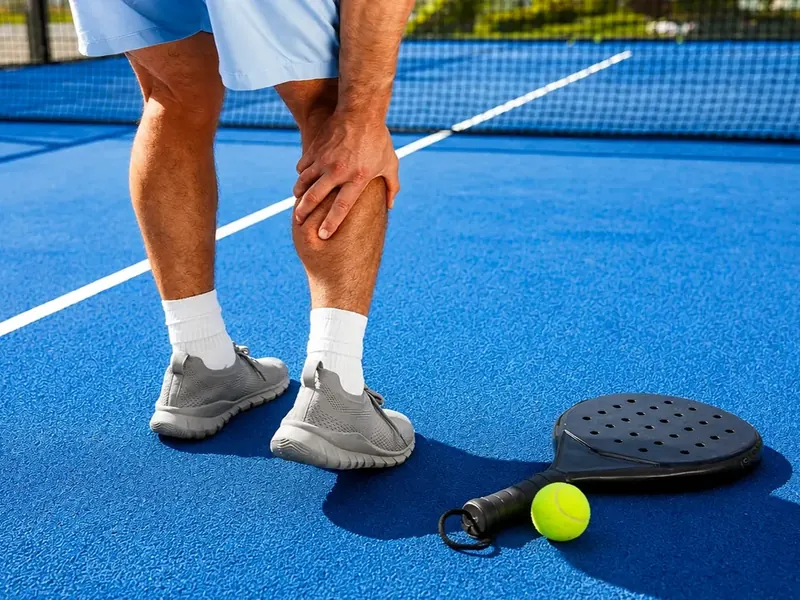
Tennis and pickleball may not look high-impact, but the explosive start-stop motion, the lunges, and the repetitive overhead swings put real stress on your muscles, joints, and tendons. Some injuries happen suddenly, with a twist or an awkward step. Others build gradually from repetitive play or from ramping up too quickly. That’s why elbow tendinitis, rotator cuff strains, back spasms, knee inflammation, and IT band issues show up so often in players.
Underneath the pain there’s usually a reason: joint restrictions, muscle imbalances, or swing and footwork mechanics that overload the same spot again and again. Ignore the minor stuff and your body starts to compensate, which tends to lead to bigger injuries. Find what’s driving it, and you can fix it.
The Honest Truth
Addressing pain early can keep it from becoming a longer-term problem. The sooner you start, the sooner you’re back on the court.
How We Fix It
Every plan has an endpoint. Here’s what the four phases look like for a tennis or pickleball injury.
Phase 1
Pain
We assess your mobility, strength, balance, and movement, then use hands-on therapy like joint and soft tissue mobilization, trigger point release, and IASTM to reduce pain.
Phase 2
Prime
Mobility work, muscle energy techniques, and targeted exercise restore range of motion and flexibility so your body moves the way the game demands.
Phase 3
Perform
Progressive strength training, balance and proprioception work, and neuromuscular re-education target your shoulders, core, hips, knees, and ankles.
Phase 4
Prevent
Sport-specific agility drills, swing and footwork evaluation, and a gradual return to reaching, rotating, lunging, changing direction, and quick stops help keep the injury from coming back.
Cannot say enough about the care and professionalism of the fine folks at Ascend Physical Therapy and wellness. Recovering from ACL Surgery, each Therapist I have worked with from my first day evaluation to now has been absolutely awesome. The care I have received has been second to none and I highly recommend Ascend to anyone in need of physical therapy of any kind. They worked with my schedule and they truly put me on a path to the best recovery I could possibly have. 5 stars is not enough for this group.
Chris B. · ACL surgery recovery
Questions, Answered
Players commonly come in with tennis elbow and golfer’s elbow, shoulder pain and rotator cuff irritation, wrist and hand pain, knee pain, ankle sprains, hip pain, muscle strains, Achilles and other tendon problems, and lower back pain. Repetitive movements and sudden changes in direction are behind many of them.
It depends on the type and severity of your injury. Your physical therapist will help you figure out which movements may need to be modified and whether you can safely keep playing while you’re in treatment.
Proper warm-ups, good mobility, strength training, sound movement mechanics, gradual increases in how much you play, and enough recovery all help reduce your risk. Seeking help at the first sign of discomfort also keeps a minor issue from turning into a setback.
Book Your Visit
Request a time and a real person from our team calls you back during business hours. No phone tree. No ‘someone will reach out.’ Just a plan.
5.0 · 100+ Google reviews
A real person calls you back
Step 1 of 5
That’s the hard part done. We’ll call during business hours to lock in your time.
Visit Us