
Phase 1
Pain
Calm the pain down.
Manual therapy and joint mobilization relieve stiffness and ease pain patterns that travel down the leg.
What We Treat
The stairs you now take one at a time. The hip stiffness that keeps you up at night. It’s fixable, and it starts with a cause-first evaluation, not a guess.
Sound Familiar?
Two or more? Keep reading.
Why It Happens
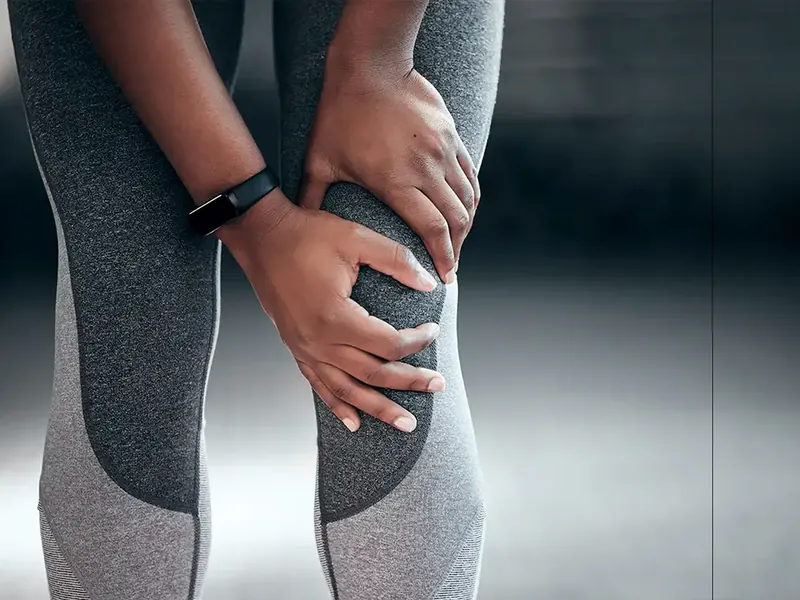
Your hips and knees absorb impact all day. Without enough strength and balance, they take more than their share. It usually comes back to a few culprits: weak or tight muscles that throw off alignment and overload the joint. Repetitive stress from running, jumping, or heavy lifting without enough recovery. Arthritis and cartilage loss that make the joint stiff. Or an injury, like an ACL tear, that left the knee less stable than it used to be.
Your hip and knee also share muscle and nerve connections. When one is weak or stiff, the other compensates, so the sore spot isn’t always the source. You’ve probably kept going on it because people count on you. That’s exactly why it deserves a real fix. A cause-first evaluation looks at how you walk, climb, and balance to find what’s actually driving it.
The Honest Truth
Nobody regrets starting too early. And the sooner you start, the easier recovery tends to be.
How We Fix It
Every plan has an endpoint. Here’s what the four phases look like for a hip or knee, whether it’s wear and tear, an injury, or a new joint.
Phase 1
Pain
Manual therapy and joint mobilization relieve stiffness and ease pain patterns that travel down the leg.
Phase 2
Prime
Mobility work restores range of motion, whether the joint is stiff from arthritis, an injury, or surgery.
Phase 3
Perform
Strength training for the hips, quads, hamstrings, and calves, plus gait retraining, rebuilds control on stairs, squats, and turns.
Phase 4
Prevent
Before you return to sport or activity, we test that the joint is stable, strong, and ready: that’s the endpoint, not just another appointment.
I loved the friendly individual care provided by each member of Ascend Physical Therapy. Their tailored exercise plan brought strength and flexibility back to my injured knee. They patiently answered my questions and encouraged me through the challenging healing process. I highly recommend them!
Phyllis S. · Knee injury
Questions, Answered
Your hip and knee share muscle and nerve connections. If one is weak or stiff, the other compensates, and that extra stress turns into pain. That’s why we evaluate how the whole leg moves, not just the spot that hurts. Treating only the sore spot misses half the picture.
Yes, it’s a big part of a full recovery. Surgery replaces the joint, but the muscles around it still need to be rebuilt. Therapy restores range of motion, rebuilds strength, and retrains walking, stairs, and getting up from a chair, and it helps reduce the risk of falls and setbacks. Whether your surgery was recent or years ago, your plan starts from where you are now.
It depends on the tear. Some meniscus tears can be managed with conservative care, depending on the type and severity of the tear, your symptoms, and your activity level. Partial ACL tears may respond to rehab, while complete ruptures typically don’t heal on their own. Whether you’re choosing surgery or non-surgical rehab, your physical therapist builds the strength and stability your knee needs, and if your symptoms call for further medical evaluation, we’ll tell you.
Book Your Visit
Request a time and a real person from our team calls you back during business hours. No phone tree. No ‘someone will reach out.’ Just a plan.
5.0 · 100+ Google reviews
A real person calls you back
Step 1 of 5
That’s the hard part done. We’ll call during business hours to lock in your time.
Visit Us