
Phase 1
Pain
Calm the pain down.
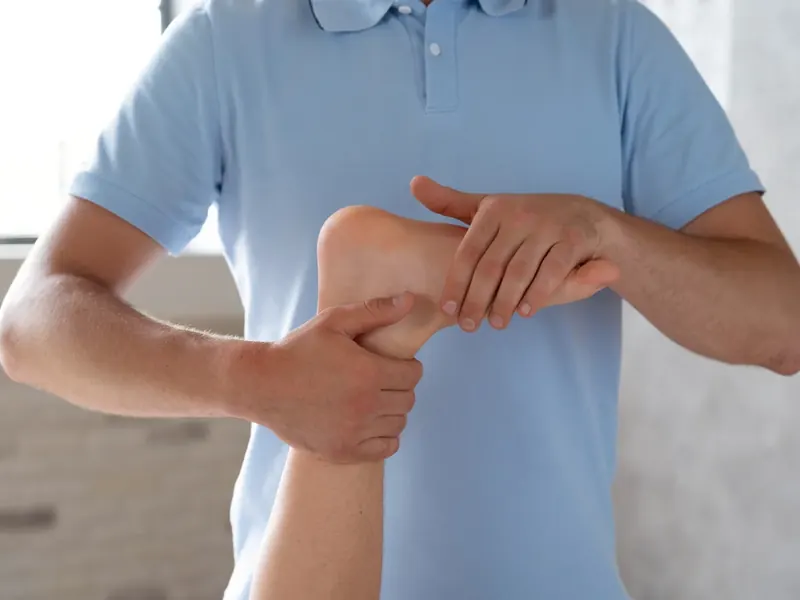
Hands-on manual therapy releases tension, improves mobility, and relieves pain so walking stops being a negotiation.
What We Treat
The first step out of bed. The walk you cut short. When every step hurts, it holds you back from what you love. It starts getting better with a cause-first evaluation, not a guess.
Sound Familiar?
Two or more? Keep reading.
Why It Happens
Your feet and ankles carry you through thousands of steps a day. Over time, wear and misalignment add up. It usually comes back to a few culprits: repetitive impact from running, jumping, or a sudden increase in activity that strains tendons and ligaments. High or low arches that disrupt natural shock absorption. A sprain that tore stabilizing ligaments and never fully regained its strength. And arthritic wear that breaks down cartilage, forms bone spurs, and restricts movement.
Sometimes it hurts without any injury at all: posture, pronation, poor footwear, or a condition like gout can all trigger pain. You’ve stayed on your feet for everyone else. That’s exactly why they deserve a real look. A cause-first evaluation pinpoints what’s actually driving it, so the plan treats the source, not just the symptom.
The Honest Truth
Nobody regrets starting too early. And the sooner you start, the easier recovery tends to be.
How We Fix It
Every plan has an endpoint. Here’s what the four phases look like for a foot or ankle.
Phase 1
Pain
Hands-on manual therapy releases tension, improves mobility, and relieves pain so walking stops being a negotiation.
Phase 2
Prime
Range-of-motion work restores movement in the ankle and foot, so each step absorbs shock the way it should.
Phase 3
Perform
Strengthening weak areas and correcting movement patterns, with orthotics or bracing when your alignment needs support.
Phase 4
Prevent
The right warm-ups, stretches, and footwear choices keep pain from starting again: that’s the endpoint, not just another appointment.
During my time at Ascend I saw several different Physical therapist and experienced different levels of intensity. The staff was always welcoming and friendly. Now, as with most physical therapy, it started out with very little range of motion and lots of hope. After several months, laughs and some pain they got me moving again. Of all the places I have had physical therapy, Ascend has been the best. From the staff to the atmosphere, there is not a better place.
Matthew B. · Getting moving again
Questions, Answered
Plantar fasciitis, Achilles tendinitis, arthritis, and overuse injuries are common culprits. Poor footwear and the way you move can also lead to pain. Your evaluation sorts out which one is driving yours, so the plan treats the cause, not just the sore spot.
Posture, pronation, bone spurs, or medical conditions like gout can all trigger ankle pain without a specific injury. Sudden pain with no swelling can also come from issues like gout or an infection. A proper evaluation reveals the cause, and if your symptoms call for further medical evaluation, we’ll tell you.
Severe swelling, bruising, or sharp pain after an injury could mean a fracture or a torn ligament, so get it checked right away. Chronic pain that won’t go away also needs professional attention. In Texas, you can start physical therapy without a referral for up to 30 calendar days, so you don’t have to wait to get answers.
Book Your Visit
Request a time and a real person from our team calls you back during business hours. No phone tree. No ‘someone will reach out.’ Just a plan.
5.0 · 100+ Google reviews
A real person calls you back
Step 1 of 5
That’s the hard part done. We’ll call during business hours to lock in your time.
Visit Us