
Phase 1
Pain
Calm the pain down.
Hands-on manual therapy, joint mobilization, and deep muscle release take the edge off so you can recover more comfortably.
What We Treat
The ankle you rolled on a bad landing. The hamstring that grabbed mid-sprint. The elbow that aches after every pickleball match. Whether you compete or play on weekends, getting back starts with a cause-first evaluation, not a guess.
Sound Familiar?
Two or more? Keep reading.
Why It Happens
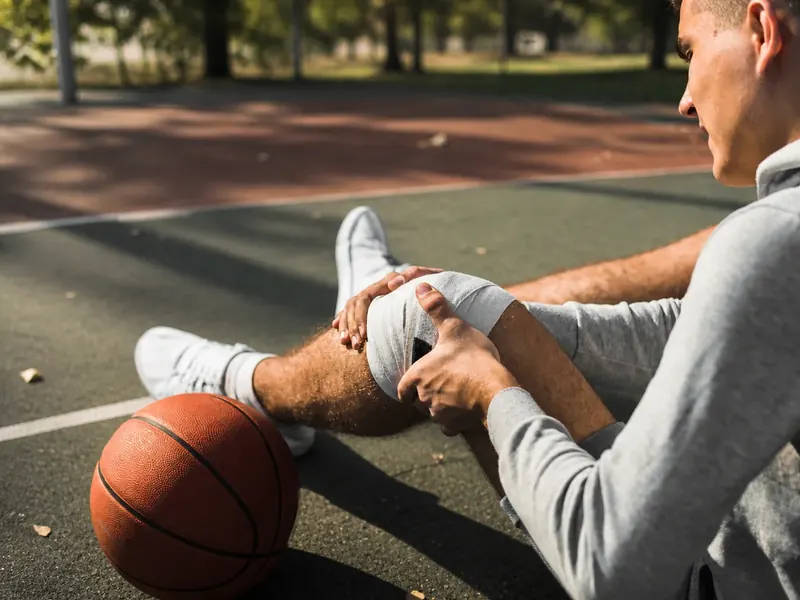
Some sports injuries happen in a split second: a sudden change of direction, an unstable landing, a collision, a pivot the knee wasn’t ready for. Others build slowly, from repetitive swings and serves or from ramping up activity too quickly. Either way, there’s usually something underneath: a weakness, a stiff area, or a movement pattern that put too much load on one spot.
That’s why rest alone so often leads to the same injury next season. We assess your mobility, strength, balance, and movement patterns to find what set it up, then build your recovery around your sport. You’re the one who’d rather play hurt than let the team down. That’s exactly why it’s worth fixing it properly, so you can play for real.
The Honest Truth
An injury doesn’t have to sideline you for long. Addressing it early is how you keep it from becoming a season-long story.
How We Fix It
Every plan has an endpoint. Here’s what the four phases look like when the goal is getting back in the game.
Phase 1
Pain
Hands-on manual therapy, joint mobilization, and deep muscle release take the edge off so you can recover more comfortably.
Phase 2
Prime
Mobility work and progressive flexibility training restore full range of motion in the injured area.
Phase 3
Perform
Progressive strengthening, neuromuscular retraining, agility drills, and sport-specific training that mirrors your game-time movements.
Phase 4
Prevent
Reaching, rotating, lunging, cutting, and quick stops get reintroduced step by step, with the mechanics that protect you from reinjury: that’s the endpoint, not just another appointment.
Cannot say enough about the care and professionalism of the fine folks at Ascend Physical Therapy and wellness. Recovering from ACL Surgery, each Therapist I have worked with from my first day evaluation to now has been absolutely awesome. The care I have received has been second to none and I highly recommend Ascend to anyone in need of physical therapy of any kind. They worked with my schedule and they truly put me on a path to the best recovery I could possibly have. 5 stars is not enough for this group.
Chris B. · ACL surgery recovery
Questions, Answered
It depends on the type and severity of your injury. At your evaluation, a physical therapist helps you work out which movements may need to be modified and whether you can safely keep playing while you go through treatment. The goal is to keep you as active as is safe, not to bench you by default.
The timeline depends on the injury and how severe it is. A sprained ankle and a knee ligament tear are very different recoveries. Either way, your plan runs through all four phases, Pain, Prime, Perform, and Prevent, and it has an endpoint: you’ll always know which phase you’re in and what’s left before you’re back in your sport.
Yes. Our rehab programs include injury prevention techniques, mobility work, and strengthening drills to keep you in shape long after recovery. Proper warm-ups, good movement mechanics, gradual increases in activity, and appropriate recovery all help reduce the risk of getting hurt again, and we teach you how to build them into your routine.
Book Your Visit
Request a time and a real person from our team calls you back during business hours. No phone tree. No ‘someone will reach out.’ Just a plan.
5.0 · 100+ Google reviews
A real person calls you back
Step 1 of 5
That’s the hard part done. We’ll call during business hours to lock in your time.
Visit Us