
Phase 1
Pain
Calm the pain down.
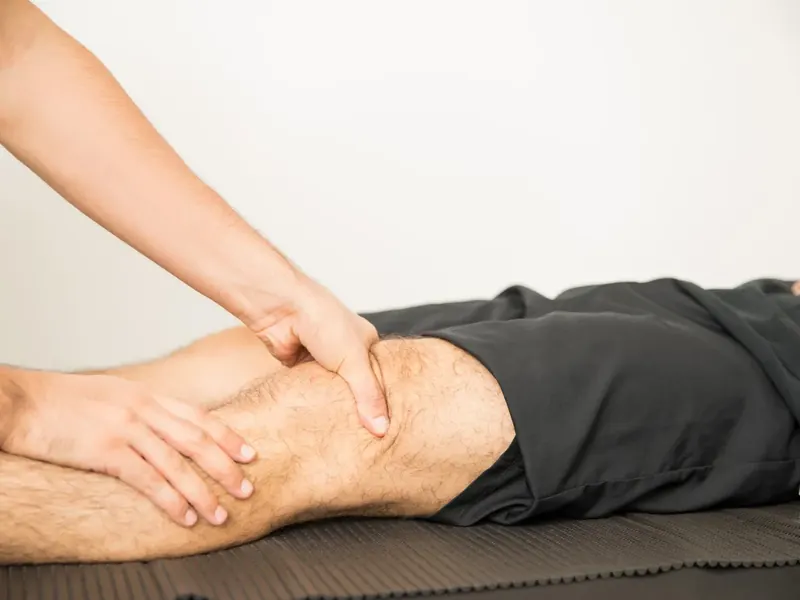
Hands-on treatment and gentle mobility work help the knee move more comfortably, from the start of your plan.
What We Treat
Stairs that feel uncertain. A squat you don’t trust. Getting up from a chair with a hand on the armrest. A meniscus tear changes how you move, and the plan to fix it starts with a cause-first evaluation, not a guess.
Sound Familiar?
Two or more? Keep reading.
Why It Happens
The meniscus is cartilage that cushions and stabilizes your knee. When it tears, walking, squatting, climbing stairs, and getting up from a chair can all start to feel painful or uncertain. And the tear rarely acts alone. The muscles around the knee, your quads, hamstrings, and hips, often lose strength and control while you protect it. Motion gets stiff. You start moving differently to avoid the pain.
Some meniscus tears can be managed with conservative care, depending on the type and severity of the tear, your symptoms, and your activity level. That’s why your plan starts with a one-on-one, cause-first evaluation: how your knee moves, what’s hard right now, and what you want to get back to. If anything points to a need for further medical evaluation, we’ll tell you and recommend the right professional.
The Honest Truth
Nobody regrets starting too early. And the sooner you start, the easier recovery tends to be.
How We Fix It
Every plan has an endpoint. Here’s what the four phases look like for a meniscus tear.
Phase 1
Pain
Hands-on treatment and gentle mobility work help the knee move more comfortably, from the start of your plan.
Phase 2
Prime
Strength work for the quads, hamstrings, hips, and surrounding muscles, plus stability exercises for better knee control.
Phase 3
Perform
Movement retraining for walking, stairs, and squatting, progressed as your knee and your goals allow.
Phase 4
Prevent
A home program keeps your progress going between sessions, and the activities you love get rebuilt before you’re cleared to go all-in: that’s the endpoint, not just another appointment.
I loved the friendly individual care provided by each member of Ascend Physical Therapy. Their tailored exercise plan brought strength and flexibility back to my injured knee. They patiently answered my questions and encouraged me through the challenging healing process. I highly recommend them!
Phyllis S. · Knee injury
Questions, Answered
Some meniscus tears can be successfully managed with conservative care, depending on the type and severity of the tear, your symptoms, your activity level, and other factors. Physical therapy can help improve strength, mobility, movement control, and function. If your symptoms need further medical evaluation, we’ll recommend that you consult the appropriate healthcare professional.
Your plan is built one-on-one around how your knee moves and what you want to get back to. It may include mobility work, strength training for the quadriceps, hamstrings, hips, and surrounding muscles, stability exercises for knee control, movement retraining for walking, stairs, and squatting, and home exercises to keep your progress going between sessions.
It depends on your tear, your symptoms, and your goals, so the timeline varies from person to person. Your plan progresses based on your recovery and moves through all four phases, Pain, Prime, Perform, and Prevent, at the pace your knee allows.
Book Your Visit
Request a time and a real person from our team calls you back during business hours. No phone tree. No ‘someone will reach out.’ Just a plan.
5.0 · 100+ Google reviews
A real person calls you back
Step 1 of 5
That’s the hard part done. We’ll call during business hours to lock in your time.
Visit Us