
Phase 1
Pain
Calm the pain down.
Hands-on manual therapy eases stiffness, and nerve release work takes pressure off irritated nerves so the joint can settle.
What We Treat
The knee that locks up after you’ve been sitting a while. The grocery run that wipes you out for the afternoon. Arthritis isn’t just “getting older,” and it starts getting better with a cause-first evaluation, not a guess.
Sound Familiar?
Two or more? Keep reading.
Why It Happens
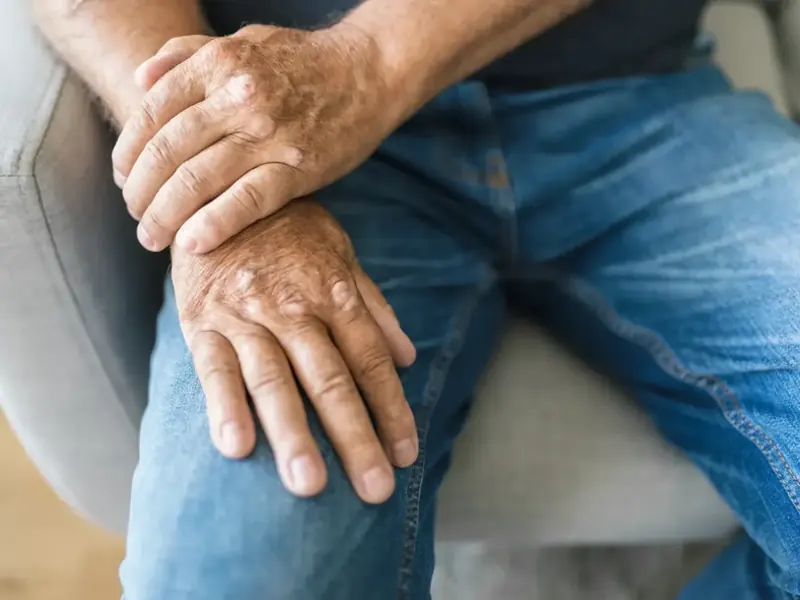
“Arthritis” covers a lot of ground. Osteoarthritis comes from cartilage gradually breaking down, which brings pain, stiffness, and lost motion. Rheumatoid arthritis is an autoimmune condition that keeps joints inflamed. Psoriatic arthritis, linked to psoriasis, causes painful, swollen joints. And on top of the type, there’s what keeps loading the joint every day: accumulated stress, posture, old injuries, repetitive motions, and muscle imbalances that leave the joint doing work its support system should share.
That’s why a generic handout so often falls short. We look at your posture, how you move, and how you walk to find what’s stressing the joint, then build the plan around that. You’re the one who still handles the yard, the errands, and the people who count on you. That’s exactly why it’s worth finding the real cause instead of just working around the pain.
The Honest Truth
Arthritis pain doesn’t have to run your life. The sooner you start, the sooner you’re protecting the joints you have.
How We Fix It
Medication and surgery aren’t the only options. Every plan has an endpoint, and here’s what the four phases look like for arthritis.
Phase 1
Pain
Hands-on manual therapy eases stiffness, and nerve release work takes pressure off irritated nerves so the joint can settle.
Phase 2
Prime
Joint mobility work restores motion, and bracing and support stabilize the joint where it needs help carrying the load.
Phase 3
Perform
Therapeutic exercise strengthens the muscles around the joint, so they share the work the joint has been doing alone.
Phase 4
Prevent
Postural correction and the know-how to manage your joints on your own help keep stress off them for the long run: that’s the endpoint, not just another appointment.
During my time at Ascend I saw several different Physical therapist and experienced different levels of intensity. The staff was always welcoming and friendly. Now, as with most physical therapy, it started out with very little range of motion and lots of hope. After several months, laughs and some pain they got me moving again. Of all the places I have had physical therapy, Ascend has been the best. From the staff to the atmosphere, there is not a better place.
Matthew B. · Getting moving again
Questions, Answered
Arthritis is often driven by accumulated joint stress, poor posture, past injuries, and lifestyle factors like diet and stress, all of which can feed chronic inflammation and pain. It isn’t just a natural part of aging. That’s why we start with a detailed evaluation to find what’s loading your joints, so your plan treats the cause and not only the ache.
Relief often starts with hands-on therapy to ease stiffness and improve how the joint moves. From there, therapeutic exercise strengthens the muscles that support the joint, and postural correction takes abnormal stress off it. A physical therapist sorts out the right mix for your joints at your evaluation, then progresses it as you improve.
Many patients see a real reduction in symptoms with the right approach. Starting early with movement therapy, inflammation control, and postural correction can help prevent further joint deterioration. Your plan runs through all four phases, Pain, Prime, Perform, and Prevent, and it has an endpoint: you’ll always know which phase you’re in and what’s left.
Book Your Visit
Request a time and a real person from our team calls you back during business hours. No phone tree. No ‘someone will reach out.’ Just a plan.
5.0 · 100+ Google reviews
A real person calls you back
Step 1 of 5
That’s the hard part done. We’ll call during business hours to lock in your time.
Visit Us